

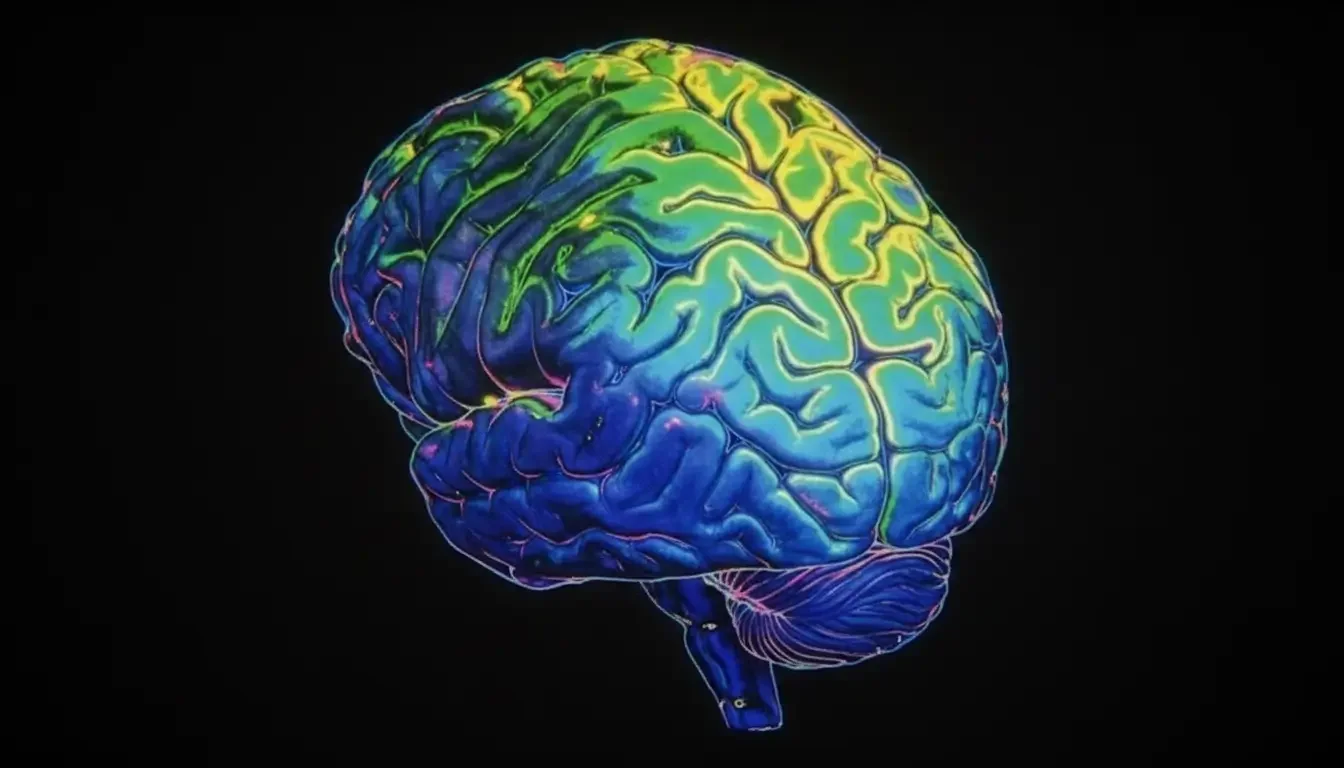
New research shows that sleep history and age work together to shape EEG readings in awake people, with children and adults showing different patterns.
Daytime Brain Waves Hold More Than Meets the Eye
Most people assume that their brain activity during the day only reflects what’s happening right now, but there’s more to the story. Researchers at the University Children’s Hospital of Zurich have discovered that both recent sleep and age can leave lasting marks on brain activity measured while you’re awake. This could change how doctors use EEG, a tool that tracks the brain’s electrical signals, to better understand what’s happening inside your head.
EEG is often used in clinics to help diagnose epilepsy and sleep disorders. Until now, most studies have focused on how sleep changes the brain’s electrical patterns during sleep itself. Less is known about how sleep affects these signals during wakefulness. The Zurich team set out to explore this gap in our understanding.
They studied 163 people between the ages of 3 and 25, recording their brain activity while they were awake. EEG works by placing small sensors on the scalp to pick up the brain’s natural electrical rhythms. Instead of just looking at broad patterns, the researchers analyzed the EEG data in more detail to see what really changes after sleep.
Signals Reveal a Story Hidden in the Details
The study found that both sleep history and age have a clear impact on EEG readings during wakefulness. The researchers identified four specific measures in the EEG signals that changed depending on these factors.
One notable result was that the way sleep influenced brain activity varied with age. Lead author Sophia Snipes explained, “EEG studies have typically relied on summary measures when comparing patients or experimental conditions, but we picked apart the EEG signal with more detail to better understand the meaning behind the differences we were observing.”
They also found a developmental shift in brain patterns. After a night of sleep, children and adults showed opposite results in their EEG signals. This suggests that children’s brains respond to sleep differently than adults, likely tied to the rapid changes in learning and memory that happen in childhood.
In short, your brain activity during the day doesn’t just reflect what’s happening now,it also carries traces of your sleep and your stage of development. This could help explain why EEG readings can look so different from one person to another.
Clues Emerge in Children with ADHD
The study also examined these EEG measures in children with ADHD. Earlier research showed that children with ADHD have different EEG patterns during sleep. Since ADHD is linked to differences in development, the Zurich researchers wanted to see if their new EEG measures would reveal specific patterns in awake children with ADHD.
They analyzed EEG data from 58 awake children with ADHD. Interestingly, the measures did not show any differences based solely on ADHD diagnosis. This suggests that the variation in EEG readings for children with ADHD might be more related to sleep quality than to ADHD itself.
It’s important to note that this does not mean sleep problems cause ADHD. Instead, it highlights that sleep issues may influence how EEG results are interpreted in children with ADHD. The researchers say that more studies are needed, but this could help doctors better understand what’s affecting the brain’s electrical activity in these children.
Fresh Insights Could Change How Doctors Read EEGs
These findings could lead to changes in how EEG is used in clinics and research. Clinicians may need to consider a person’s recent sleep and age when reviewing EEG results. As Snipes points out, “[Researchers and clinicians] have used this tool for a while, but more elaborate forms of data analysis can improve interpretations of EEG recordings. Even though we know certain variables change the EEG signal, we can’t assume what these changes mean if we don’t know what parts of the signal are changing.”
By using more detailed EEG analysis, doctors may be able to tell apart changes caused by sleep from those linked to neurological conditions. This approach could help provide more accurate diagnoses and better care for patients.
What’s Next for Brain Science
The Zurich team plans to expand their research to larger groups and explore how sleep quality interacts with other developmental conditions. They are also interested in finding out which stages of sleep have the biggest impact on daytime EEG signals. This knowledge could lead to new ways to support brain health through better sleep habits.
The Brain’s Story Goes Beyond the Present
This research shows that awake brain activity is shaped by more than just the present moment. Your sleep history and stage of development both play a role. For families, this highlights the importance of regular, good-quality sleep for growing children. For clinicians, it offers a new way to interpret EEG results with greater accuracy.
By considering factors like sleep and age, we can get a clearer picture of brain health and avoid misreading the signals our brains send. This study reminds us that our brains are always changing and adapting, shaped by our daily routines and experiences.
Source: News Medical