

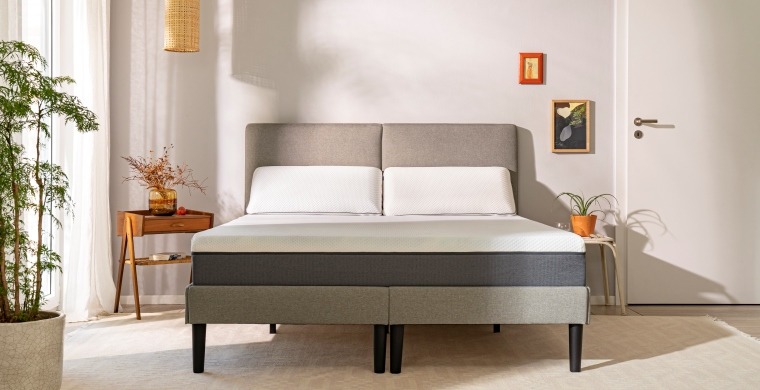
Why is it so important to know how to choose your mattress? Even though usually covered and neglected, the mattress is the heart of your bedroom, the one that makes or breaks your experience. It influences comfort, sex, and especially sleep quality. If you haven’t paid much attention to your sleep so far, it’s high time you started. Sleep is key to relieving stress and musculoskeletal pain, and restoring your energy levels. It influences your mood, your daily performance, and your overall well-being. The duration and quality of your sleep are heavily influenced by the mattress you sleep on. Think back, hip, neck, or shoulder pain from inadequate mattress firmness, bad spine alignment from sagging, night sweats, partner disturbance, and more.
Therefore, it’s safe to conclude that sleeping on the wrong mattress for years can contribute to:
- Heart disease

- High blood pressure
- Stroke
- Diabetes
- Obesity
- Depression
- Impaired cognitive functions
- Lower physical performance
- Increased mortality risk
The list could continue, but the conclusion is clear:
It’s vital that you sleep on a high-quality, comfortable mattress that helps you enjoy restful sleep throughout the night!
But how do you go about it?
10 Factors to Consider When You Choose Your Mattress
1. Spine Alignment
All mattress brands claim their products offer perfect or neutral spine alignment. However, maintaining your spine straight during sleep does not necessarily ensure sleep quality. Yes, mattresses may influence the sleepers’ spinal curvature. However, there is no concrete evidence that temporary spinal misalignment leads to musculoskeletal problems. Moreover, if you already suffer from spine alignment issues, it’s unlikely that you’ll sleep comfortably on a mattress forcing your spine into alignment. Therefore, look for a mattress that aligns and adjusts to your body, and provides adequate support and cushioning, but don’t fall for marketing gimmicks.
2. Sleeping Positions
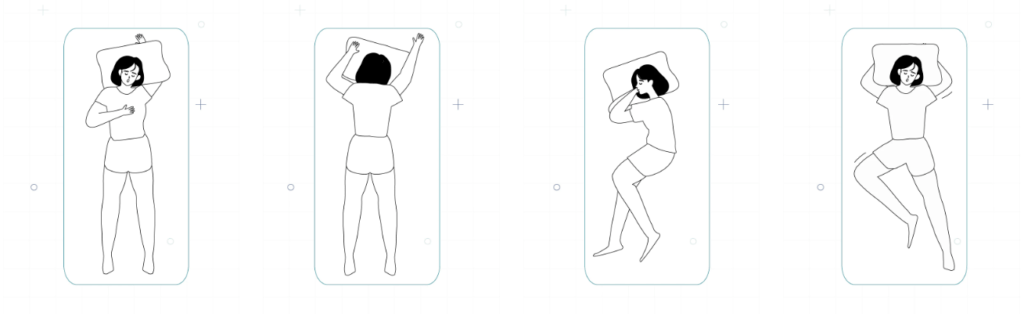
It’s essential to choose a mattress suitable for your sleeping position. Otherwise, no matter how great that mattress is, it won’t feel comfortable and won’t provide the support you need. Contrary to what you may think or to what others may try to make you believe, there is no right or wrong sleep position. Depending on weight, lifestyle, habits, and even health conditions, some people are better off sleeping on their back, others prefer to sleep on their stomach, some can only sleep on their side, and others combine several sleep positions. In the end, it’s up to you to find the sleep position that provides the most comfort and lets you enjoy the most restful sleep. Depending on it, you should choose a mattress of adequate firmness.
3. Mattress Firmness
All merchant and review websites discuss mattress firmness. How is it determined and what should you look for? Firmness ratings go from 0 to 10, where the lower values correspond to soft mattresses and the higher values correspond to firm ones. The firmness of your mattress should be chosen based on several factors.
Sleeping Positions
- Back – Most of the pressure is focused on your upper back and lower back, so it helps to sleep on a medium-firm to firm mattress (7.5-10) that will support your spine.
- Stomach – The pressure is focused on your chest, stomach, and hips, so, again, a firmer mattress (7.5-10) should feel more supportive and facilitate better sleep.
- Side – Since the pressure is on your shoulders, arms, and hips, a firm mattress could cause local pain and stiffness, so a softer option (4-6) should work best.
- Combination – A medium-firm mattress should work well for most combination sleepers (5-8).
Sleeper Weight
- Lightweight sleepers – Those weighing less than 130 lbs create little pressure and should find the needed comfort and cushioning in a softer mattress.
- Medium-weight sleepers – Those weighing between 130 and 230 lbs generate moderate pressure and should find the support they need on a medium to medium-firm mattress.
- Heavy sleepers – Those weighing over 230 lbs usually experience sinkage and require additional support and benefit more from firmer mattresses.
Health Conditions
Sleepers suffering from various health conditions may have specific firmness needs that should be identified with the help of one’s health practitioner. For example, a 2021 study focusing on the type of mattress to choose for avoiding back pain and improving sleep quality concluded that medium-firm mattresses promote comfort, spine alignment, and sleep quality. In cases of musculoskeletal pain, specialists recommend testing several mattresses to choose the one that feels the most comfortable.
4. Types of Mattresses
There are several types of mattresses available, categorized based on the materials they’re made of and on their design:
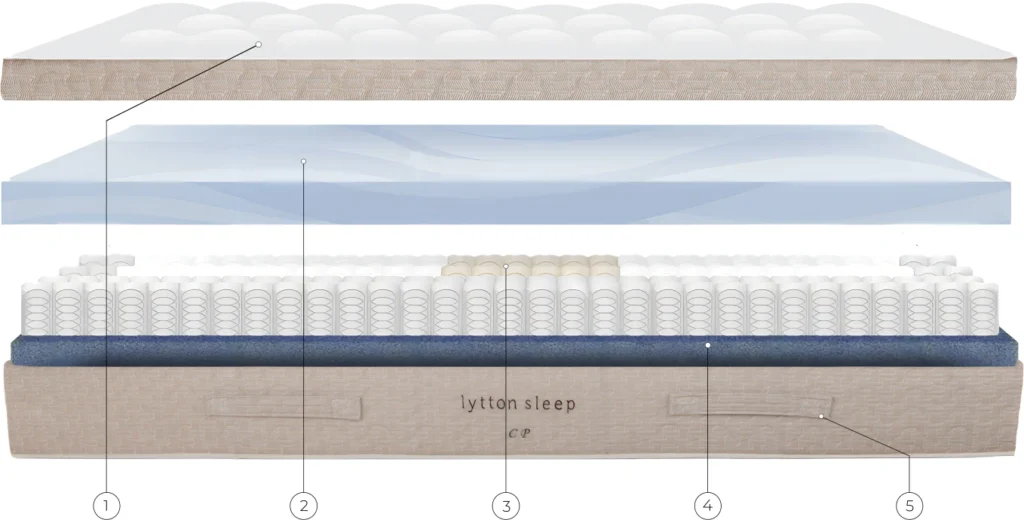
- Innerspring – These mattresses rely on a linked coil system to provide support and bounce. The coil system is further covered with latex, foam, or fabric to improve comfort. Innerspring mattresses tend to sleep pretty cool, they’re quite affordable, but they don’t excel at motion isolation, lose their bounciness, and tend to get squeaky and saggy with time.
- Memory Foam – These mattresses are considered very comfortable due to their ability to adapt to the sleeper’s body shape and isolate motion. Cheaper options often use fiberglass inserts to improve their fire resistance, and they tend to trap heat. To be safe and stay cool, consider choosing a mattress made with CertiPur-US foams, varieties of which include cooling gel-infused, open-cell, and Serene foam.
- Hybrid – These mattresses combine memory foam with coils to provide the best in both categories: more support, better cooling, and the perfect combination of bounce and cushioning. Of course, their performance depends on the quality of the foams and coils. You already have foam recommendations above. For coils, look for individually wrapped, zoned, quantum edge coil systems made from tempered steel.
- Latex – These mattresses are usually organic and use a byproduct of the rubber tree sap to provide comfort comparable to that offered by memory foam but more bounce. They tend to be quite heavy and not as good at isolating motion as memory foam. Latex can slabs are often combined with coils systems in latex hybrid mattresses.
- Pillow-top & Euro-top – These mattresses take their name from the pillow-like feel they provide thanks to the plushy layer sewn onto their top. Pillowtop mattresses use softer, fluffier fibers, while Euro-top mattresses use denser, firmer, smoother fabrics. Both can have an all-foam, innerspring, hybrid, or latex construction.
While you should be able to find good mattresses in many of these categories, it’s important to stay away from harmful ones, containing fiberglass or substances you are allergic to. Check their specs carefully and look for those that are made with certified materials, like CertiPur-US foams, Oeko-Tex or organic covers, GOTS and GOLS latex, etc.
5. Mattress Thickness and Support
Yes, mattresses come in different firmness levels, starting from as low as 6” or 8” and going as high as 16” and even more. Since sleep is so important for your health and well-being, it’s not worth cutting corners and settling for less than 10” or you’ll feel the hardness of the foundation and not be able to enjoy real comfort. Mattresses of this thickness are compatible with murphy beds, trundle beds, and sit well on adjustable foundations as well. Of course, if you can afford it and are serious about treating yourself to better sleep, it’s worth settling for a 12” or, better yet, a 14” thick mattress.
Anything above that seems a bit exaggerated, especially for a normal height bed, and won’t sit well on adjustable bases, but, of course, it’s your right to go wild. Just remember to consider the foundation you’ll use the mattress on, the total height of the bed, and thickness impact on motion isolation and support, especially edge support. We didn’t cover the latter in detail but it’s important.
Many mattresses make you feel like falling off whenever you get closer to the edge or try to sit or get up. To avoid that, look for a mattress with reinforced side panels, perimeter foam encasements, and or reinforced cover stitches. Also take into account that very thin or flexible covers do not encourage edge support, and high thicknesses, especially in softer mattresses, may negatively impact edge support.
6. Cooling Properties
If you sleep in a hot weather region, are facing menopause, or battle excess sweating, then cooling properties are definitely something to consider when choosing your mattress. There are some high-end smart beds that actually give you some control over temperature and sleeping experience. With regular mattresses, you can prevent night sweats by looking for natural, breathable covers, cooling foam varieties (gel-infused, open-cell, Serene), and individually pocketed coils systems, as they enhance airflow and do a good job dissipating body heat.
7. Sleeping Arrangements
When you sleep alone, your needs are the only ones you need to meet. When you share your bed, you have to pay attention to your partner’s needs as well. Another important aspect to consider is motion isolation. After all, neither of you wants to be disturbed and lose sleep whenever the other one tosses and turns or gets out of bed. The good news is that memory foam and hybrid mattresses tend to do a good job at isolating motion, unlike innerspring and latex mattresses.
For couples, weight capacity and bounciness are important too. The mattress will need to support you and your partner’s combined weights. It also has to be responsive and provide the needed bounce and support during sex, to help minimize your efforts, ease movement, and enhance comfort and pleasure. Unfortunately, there are cases when you simply can’t have everything, so you have to adjust, change positions, and keep an open mind.
Depending on your and your partner’s sleeping position and weight, you may need different firmness levels. If that’s the case, instead of sacrificing one’s comfort to the other’s benefit, consider a split king bed that allows you to use 2 twin XL mattresses in the same setup. This way, each sleeper can have their needs met on their side of the bed. If that’s not an option, then look into mattresses that offer several firmness levels in the same setup or adjustable mattresses with split comfort layers that can be flipped to adjust firmness.

8. Trial & Warranty Periods
Trials
All mattresses come with a trial period. It begins when your mattress is delivered and gives you anywhere between 30 days and 18 months to test the mattress and return it if you don’t like it. Sounds amazing, right? In theory, it is, and it makes sense to choose the mattress with the longest trial period. However, it should not be the decisive factor.
When you receive the mattress, it’s conveniently compressed and rolled in a box. After it inflates, it becomes huge and heavy, nearly impossible to pack and move. Most manufacturers request that you sleep on the mattress for minimum 30 days before returning it. The goal is, supposedly, to give your body time to get used to the mattress. In reality, stats show that most people give up on the idea of returning items that require complicated setups to avoid the hassle.
Some ask you to donate the mattress, which means you have to find a beneficiary in your area and make the arrangements yourself. Others agree to pick up the mattress but scheduling everything is pretty troublesome. There are also those who offer to send you a topper or provide a partial refund. Some even let you choose the option that works for you.
Ideally, you want to choose the right mattress for the beginning and not have to deal with refund requests and returns. Before you place the order, though, read the terms of the trial period carefully, as some sellers request that you pay for return shipping and handle the return packaging yourself, which can end up very costly and troublesome.
Warranties
 Most warranties cover 10 years and only manufacturing defects, not minor damage due to normal wear and tear. Some brands offer over 20 years and even lifetime warranties, whatever those may mean. While, obviously, longer warranties have their value, it’s important to start off with the right expectations:
- The average mattress lifespan is between 7 and 10 years, so don’t rely too much on lifetime or decades-long promises.
- Your sleeping needs and preferences will definitely change within 10 years (weight loss or gain, pregnancy, sleep position, health conditions, etc.).
- You may move, redecorate, or just replace your bed, case in which it makes sense to celebrate with a new mattress.
To conclude, long warranties are good but they shouldn’t govern your decision or justify paying a higher-than-average price.
9. Prices
This is perhaps the trickiest factor you need to consider when choosing your mattress. Prices start at $500 and exceed $2000. How much should you pay for a mattress? There’s no right or wrong answer. The same mattress may seem a bargain to some and luxury to others. We recommend finding a couple of mattresses that meet your needs in terms of comfort, firmness, thickness, and materials, and compare them.
The best option is probably mid-priced and the best strategy is not to fall for hypes. Usually, when an offer seems too good to be true, it is. So don’t fall for it, but dig into other details, like previous pricing, return terms, and, why not, third-party and, most of all, buyer reviews. We’ll discuss the latter separately.
10. Reviews
Looking for reviews seems like the best way to make sure you buy a quality mattress from a reliable brand. But what reviews should you read and which ones should you trust? Try buyer reviews, but not from the seller’s website, where they can be easily faked and manipulated. Read those from independent platforms, like Amazon, TrustPilot, ScamAdvisor, Google reviews, and various social media platforms. Look on Reddit and other forums.
Sure, keep in mind that disappointed buyers are much more likely to make a fuss and share their impressions than happy ones. Also remember that many publishers and influencers receive free products and commissions to endorse a specific brand and, when that happens, it’s difficult to stay objective, especially since some brands pay higher commissions or are much more popular and have much more aggressive advertising campaigns than others.
Read several bed reports from various sources for each brand you consider before making a decision. It will be easier to form an idea and make an informed purchase.
The Bottom Line on How to Choose Your Mattress
 Sorry, I know you were hoping for a simpler process! It’s not easy and there is no magic guide on how to choose your mattress in the blink of an eye. But investing time and effort is worth it. You’ll be sleeping on your new mattress for the next decade. The choice you make now will influence the quality and restfulness of your sleep and your comfort when sleeping, watching TV, or having sex on that mattress. Do your research, compare, visit a local mattress store if you have one close by, and follow your instincts! There is a perfect mattress for you out there, no matter your sleeping needs and preferences!