


Let’s talk about something familiar to most of us: back pain. That persistent discomfort that appears during long workdays or disrupts your sleep is more than just a minor annoyance. It’s a global health issue affecting millions every day. By the time you finish reading this paragraph, thousands more around the world will have experienced new back pain symptoms.
What Is Back Pain?
Back pain refers to any discomfort along your spine, from the base of your skull down to your tailbone. It can present as a dull ache, a burning sensation, or sharp, sudden pain. Most cases occur in the lower back (lumbar region), where your spine supports the most movement and weight. However, not all back pain is the same. Acute pain lasts less than six weeks and often results from sudden strains. Subacute pain persists for six to twelve weeks. Chronic back pain continues for more than three months, becoming a constant companion.
The causes of back pain are diverse. Sometimes, it’s due to muscle spasms from lifting incorrectly. Other times, disc problems occur when the cushions between your vertebrae bulge or rupture. Nerve compression can cause shooting pain down your legs, and arthritis in the spinal joints can also contribute. A critical but often overlooked factor is your mattress. An unsupportive sleeping surface can misalign your spine night after night, straining muscles and joints. Considering you spend about a third of your life sleeping, poor spinal alignment during those hours can lead to cumulative damage.
Prevalence and Impact
Consider these statistics: up to 80% of adults experience significant back pain at some point in their lives. Globally, it is the leading cause of disability according to WHO data. Each year, businesses lose billions of dollars due to back pain-related absences, making it the top reason for missed workdays. Adults between 30 and 60 are most at risk, though no age group is entirely immune.
The effects of back pain extend beyond physical discomfort. Studies show that chronic back pain sufferers experience 42% more restless nights. Discomfort makes it difficult to find a comfortable sleeping position, leading to frequent tossing and turning and preventing restorative sleep.
This creates a vicious cycle: pain disrupts sleep, poor sleep lowers pain tolerance, and fatigue worsens posture. Everyday activities such as tying your shoes, playing with children, or even sitting through a meal can become challenging. The emotional impact is significant as well, rates of anxiety and depression triple among those with chronic back pain, affecting overall quality of life.
Why Getting the Facts Matters
Many people ignore early warning signs, assuming the pain will go away. This can be a costly mistake. Untreated acute back pain often develops into chronic conditions. Delaying intervention allows minor muscle imbalances to become persistent postural problems, and nerve irritation can progress to permanent damage. Knowledge is your best defense. Recognizing different pain patterns helps you identify the underlying cause more quickly. Is it muscular, disc-related, or connected to your mattress? Each type requires a different approach.
Prevention
Understanding prevention is just as important. Simple daily habits can dramatically reduce your risk:
- Maintain a neutral spine when sitting and support your lower back.
- Lift with your legs, not your back.
- Stay active to keep your spinal discs healthy through movement.
Most importantly, evaluate your sleep setup. Your mattress should keep your spine in its natural alignment throughout the night, not too soft to cause sagging, and not too firm to create pressure points.
Relief
For those already experiencing discomfort, try these natural relief methods:
- Heat therapy to relax tense muscles
- Gentle yoga to improve flexibility
- Core strengthening exercises to support your spine.
- Staying hydrated, as dehydrated discs lose their cushioning ability.
However, if your back pain persists, seek professional evaluation rather than self-diagnosing serious conditions.
The main takeaway is that back pain is not inevitable. With proactive care and smart lifestyle choices, you can protect your spine’s health. Your future self will thank you for taking action today, because nothing should prevent you from living life to the fullest – not even your own body.
Types of Back Pain and Their Root Causes
Common Types of Back Pain
Let’s explore the different ways back pain can manifest.
Acute vs. Chronic Back Pain
Acute back pain typically appears suddenly, such as when lifting a heavy box incorrectly and feeling a sharp twinge. It usually lasts less than six weeks.
Chronic back pain, on the other hand, is persistent and lasts for more than three months, often linked to conditions like osteoarthritis or spinal stenosis.
Main Causes of Back Pain
Poor Posture and Ergonomics
Poor posture can quietly undermine spinal health. Slouching at your desk for hours flattens the lumbar curve and strains discs and ligaments, creating constant low-grade tension that can escalate into severe back pain. Proper ergonomics go beyond just having a good chair; they include how you hold your phone, stand at the counter, and even how you sleep.
Injury and Overuse
Injuries and overuse are common causes of acute back pain. Whiplash from a car accident, a fall on icy steps, or lifting heavy objects without proper form can all lead to injury. Don’t overlook microtraumas, which are tiny repetitive stresses from activities like gardening or warehouse work. These can accumulate over time and suddenly result in significant pain. There are also muscle and ligament strains, which occur when soft tissues are overstretched or torn, often from repetitive movements like frequent bending at work or sudden twists during sports. The pain usually feels like a dull ache that worsens with movement. Strained muscles may also spasm as a protective response, creating a cycle of discomfort.
Degenerative Conditions
Degenerative conditions are major contributors to chronic back pain. Osteoarthritis wears down spinal joints, spinal stenosis narrows nerve pathways, and degenerative disc disease reduces cushioning between vertebrae. These conditions develop slowly, and morning stiffness often signals their presence.
Disc problems present unique challenges. Spinal discs act as shock absorbers between vertebrae, but when they bulge or herniate, they can press on nerves. This often causes radiating pain down the legs, sometimes accompanied by numbness or tingling. Unlike muscular back pain, disc issues are often worse when sitting, and sneezing or coughing can intensify symptoms. While disc degeneration naturally occurs with age, poor body mechanics can speed up the process.
Structural issues such as scoliosis create different back pain patterns. Abnormal spinal curvatures place uneven strain on surrounding muscles, leading to discomfort that typically develops gradually. Arthritis in the spinal joints also falls into this category, causing pain as bones rub against each other with every movement. These conditions require specialized treatments, as standard muscle therapies may not be effective.
Lifestyle and Occupational Factors
Lifestyle and occupational factors also play a significant role in back pain risk. Sedentary jobs can weaken supporting muscles, while excess weight increases spinal load. Even stress can unconsciously tighten back muscles. High-risk occupations include nursing, driving, and desk work. The positive news is that small daily changes, such as taking standing breaks or doing core exercises, can significantly reduce back pain risk.
Dealing with the Causes of Back Pain
Different types of back pain require tailored solutions. Muscle strains often respond well to heat and gentle stretching. Disc issues may require careful modification of movements. Structural problems need targeted strengthening. Understanding the specific cause of your back pain is essential for effective treatment. For example, a construction worker’s lifting injury needs a different approach than an office worker’s postural strain.
Prevention strategies also depend on the cause. For injury-related back pain, proper lifting technique is essential. For degenerative back pain, low-impact movement helps preserve joint health. To prevent postural back pain, set reminders to check your spine alignment. Occupational back pain may require a workstation evaluation. Matching solutions to the specific cause of your back pain leads to the best results.
Your mattress plays a pivotal role. An unsupportive mattress can misalign your spine every night, straining muscles and compressing discs. This can turn temporary pain into chronic issues. The ideal mattress maintains your spine’s natural curves, whether you sleep on your side or back. Quality sleep reduces inflammation and supports tissue repair, which is crucial for all types of back pain.
Natural relief methods should match the cause of your back pain. Heat therapy can ease muscle tension but may aggravate joint pain. Gentle yoga helps create space between vertebrae for disc issues. Aquatic therapy is beneficial for arthritis sufferers, and hydration keeps discs functioning as shock absorbers. Always tailor your approach to your specific back pain profile.
The Link Between Your Mattress, Sleep, and Back Pain
How Mattresses Influence Back Pain
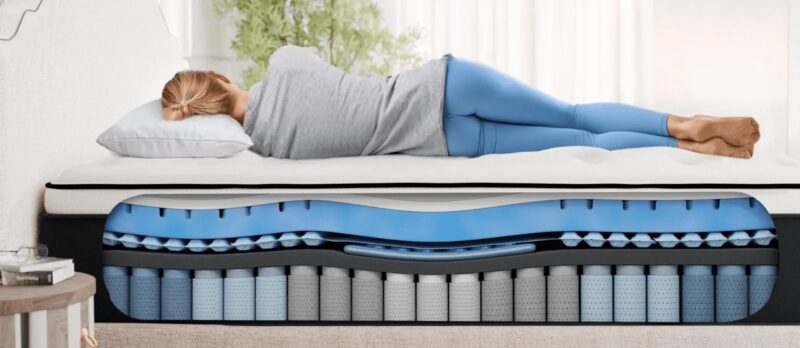
Your mattress is more than just a place to sleep; it’s a vital part of your spinal health. A mattress that provides proper support maintains your spine’s natural curves throughout the night, preventing unnecessary strain on muscles and discs. However, an unsupportive mattress can contribute to back pain by letting your hips sink too deeply or failing to cushion pressure points.
Spinal alignment during sleep is extremely important. You spend hours in one position, so a mattress that keeps your head, shoulders, and hips aligned prevents twisting and uneven stretching of ligaments. Without this support, discs experience uneven pressure, and nerves can become irritated, leading to morning stiffness that can turn into persistent back pain.
Old mattresses can become silent contributors to pain. After seven to ten years, materials degrade, springs weaken, and comfort layers compress. What once felt comfortable can become harmful. A sagging mattress can force your spine into an unnatural shape all night, stressing tissues and potentially leading to chronic back pain.
Choosing the right firmness is crucial. Research consistently shows that medium-firm mattresses benefit most back pain sufferers. Soft mattresses let hips sink too much, bending the spine, while overly firm mattresses create pressure points. A medium-firm mattress offers balanced support and cushioning, helping to maintain proper alignment.
Your sleep position also matters. Side sleepers need more give at the shoulders and hips, while back sleepers require firmer lumbar support. Stomach sleepers need very firm support to prevent spinal overextension. The right mattress adapts to your natural posture, and neglecting this match can result in nighttime back pain that lingers during the day.
Best Mattresses for Back Pain
There are a lot of mattresses out there, so choosing one can be overwhelming, especially when suffering from back pain. To help narrow down the list, we asked for the advice of Dr. Dave Candy. Doctor of physical therapy, board-certified orthopedic physical therapy specialist, Fellow of the American academy of orthopedic manual therapists, and founder of More 4 Life, Dr. Candy authored two books: Chronic Pain: You’re Not Just Getting Older, You’re Not Crazy, and It’s Not All In Your Head and The Over-50 Sciatica Solution. He also continues to educate people on pain-related and recovery topics through his YouTube channel.

According to him:
- For most individuals, medium to firm support is best. This allows a good balance between support and comfort.
- Look for mattresses with individual coils. Individual coils help the mattress adapt to your unique body contour. They provide more support in places where you need it and less in places where you don’t need as much.
- In addition to individual coils a memory foam layer can also help customize the mattress to your body.
- Rotate or flip your mattress (if able) every 6 months to help it last longer.
Applying Dr. Candy’s advice to the products reviewed so far, the following mattress models come to mind:
Best Value for the Money: SweetNight Twilight Pillowtop Hybrid
Also on my list of best mattresses under $500, this mattress is perfect for back pain sufferers with limited budget. It’s a pillowtop hybrid with a simple yet effective structure: knitted breathable cover, high-density support foam, cooling gel memory foam, comfort foam, and pocketed coils. Available in 10”, 12”, 14”, and 16” thickness, it’s rated as medium firm. If you prefer firmer support, the lower thickness versions should work well for you. For more cushioning, go with the thicker versions. Priced between $380 and $550 for a queen, depending on thickness, it’s a steal for the comfort and support it provides.
Best Relief and Support: Origin LumbarCloud Pillowtop Hybrid
If you can afford to spend a little over $1000 on back pain relief, Origin should have the best solution for you: their 14” LumbarCloud mattress with an impressive materials combination: CashmereCloud Pillowtop cover, Alpaca wool blend, Antigravity Gel™ matrix, DeepRelief+™ memory foam, and two coils systems: ErgoCoil™ (up to 1,000 microsprings), TitaniumCoils™ (up to 2,040 coils distributed across 7 support zones. It’s the only mattress with two coils systems I’ve seen, and comes with some impressive endorsements, a 1-year trial, and a lifetime warranty. All for only around $1200/queen.
Best Flippable and Longest Lifespan: Durable Mattress Euro Top Hybrid
Most flippable mattresses have a different firmness level on each side. This means that, when you flip them, you can’t enjoy the same comfort and support. That’s where Durable Mattress comes in. It’s flippable but with the same firmness on each side. You can choose between Medium, Firm, and Soft support. The 14” sandwhich-like design includes a cooling Euro top cover, with high-density foam, Serene foam, and transition foam layers on each side, and the zoned, steel pocketed coil system in the middle. The queen costs around $1600 and includes the cooling cover upgrade.
Best Organic and Best Service: Saatva Latex Hybrid
Those interested in natural materials and environment protection and with a decent budget will appreciate this luxurious mattress. It comes with a hand-tufted organic cotton cover, New Zealand wool, 5-zone natural latex foam layer with vented airflow channels, individually wrapped coils, and organic eco-loft pad made of organic cotton and wool. Add the Guardin™ botanical antimicrobial treatment, and you have the picture of a solid, supportive, and sustainable mattress priced at around $2300 for the 12” queen. It comes with free setup and old mattress removal, 1-year trial, and lifetime warranty.
The Impact of Back Pain on Sleep and Well-Being
Back pain and poor sleep often create a vicious cycle. Discomfort makes it hard to find a comfortable position, leading to constant shifting and fragmented sleep. This disrupts deep REM stages, leaving you feeling exhausted even after a full night in bed. Fatigue lowers your pain tolerance, making back pain feel even worse, and the cycle continues.
Lack of sleep increases suffering. Studies show that tired brains process pain more intensely, making minor aches feel overwhelming. Concentration decreases, daily tasks become more difficult, and overall well-being declines. Without restorative sleep, your body cannot produce enough natural pain-relieving chemicals, inflammation increases, and tissue repair slows down.
Mental health is directly affected. People with chronic back pain are three times more likely to experience depression than those without pain. Constant discomfort and sleep loss wear down emotional resilience, making small frustrations feel overwhelming. Social withdrawal and strained relationships often follow, and the mental burden can be even greater than the physical one.
Healing requires uninterrupted sleep. Growth hormone, which repairs damaged tissues, is released during deep sleep. Blood flow increases to stressed muscles, and inflammation decreases. If back pain disrupts sleep, recovery is delayed, and old injuries may linger. In this sense, your mattress becomes essential healthcare equipment. It either supports recovery or hinders it.
Daytime functioning also suffers. Exhaustion from poor sleep impairs judgment, slows reaction times, increases accident risks, and reduces work performance. Enjoyable activities are often abandoned, and the overall quality of life diminishes. Your sleep and well-being are closely linked to your ability to manage pain.
Breaking the Cycle
Evaluate your sleep environment. Lie on your mattress while someone observes your alignment. Visible sagging is a sign that it’s time for a replacement. If you consistently wake up stiff, your body is signaling spinal misalignment. Don’t ignore mattress age; even a bed that feels comfortable may be causing hidden damage.
Prioritize good sleep habits. Stick to consistent bedtimes to regulate your circadian rhythm. Keep your bedroom dark and cool to promote melatonin release, and avoid screens before bed to prevent disruption of sleep hormones. While these habits alone won’t cure back pain, they create the right conditions for healing, especially when combined with proper support.
Pay attention to how you feel in the morning. Lingering aches after getting up may indicate mattress issues, while stiffness that resolves quickly may have other causes. Notice if your sleep quality changes on weekends or in different beds; these clues can help identify your mattress’s role in your back pain.
Remember, quality sleep is not a luxury; it is a medical necessity. Investing in the right support pays long-term dividends. Improved back pain, increased energy, better mood, and overall health are all possible when your sleep environment meets your physical needs. Tonight’s rest could be the start of your recovery.
Natural Prevention and Relief Strategies for Back Pain
Simple Habits to Prevent Back Pain
Maintain Proper Posture
Preventing back pain begins with daily awareness. Your spine needs alignment. When sitting, keep your feet flat, knees level with your hips, and your screen at eye level. When standing, distribute your weight evenly and imagine a string gently pulling your head upward. These posture adjustments help prevent unnecessary strain.
Strengthen Core Muscles
Core strength is essential for spinal support. Weak abdominal muscles force your back to work harder, increasing the risk of pain. Incorporate planks or bird-dog exercises into your routine three times a week. Start with 10-second holds and focus on consistency. Stronger core muscles provide better support and lower the risk of injury.
Use Ergonomic Furniture
Your workspace setup directly affects your back health. Use ergonomic chairs with lumbar support to maintain your spine’s natural curves. Your desk should be at a height that allows your elbows to rest at 90 degrees. Remember, ergonomics go beyond furniture; arrange frequently used items within easy reach to avoid twisting.
Take Regular Movement Breaks
Movement is essential for spinal health. Set reminders to move every 30 minutes. Stand up, stretch, or walk for a couple of minutes. These short breaks prevent stiffness. Simple stretches or shoulder rolls help reset muscle tension, and movement nourishes spinal discs by circulating nutrients.
Prevention becomes easier as these habits become routine. Staying hydrated keeps discs supple, maintaining a healthy weight reduces spinal stress, and using proper lifting techniques, bending your knees, and keeping objects close, protects your back. These everyday choices build resilience against common back pain triggers.
Natural Ways to Relieve Back Pain

Gentle Stretching and Yoga
When back pain strikes, natural relief methods can help. Gentle stretching improves flexibility. For example, try the knee-to-chest stretch: lie flat and pull one knee toward your chest, hold for 20 seconds, then switch sides. Cat-cow poses on your hands and knees can also help mobilize your spine. Always listen to your body and avoid overextending.
Heat and Cold Therapy
Temperature therapy offers targeted relief. Use ice packs to reduce inflammation after a new injury. Apply for about 15 minutes. Heat helps relax chronic muscle tension. Warm baths or heating pads can increase blood flow. Alternating heat and cold can be effective for stubborn pain. This drug-free approach can ease symptoms safely.
Mindfulness and Relaxation Techniques
Managing stress is crucial, as it can worsen discomfort. Mindfulness techniques can help break the cycle. Practice deep breathing for five minutes to relax your muscles. Progressive relaxation, where you tense and then release muscle groups, is also helpful. Meditation apps can guide you if you’re new to the practice. Lower anxiety means less muscle tension in your back.
Massage and Foam Rolling
Self-massage can provide immediate relief. Use a tennis ball against a wall to target knots or try foam rolling to release tight fascia. Move slowly over tense areas, pausing at tender spots, and combine with deep breathing. Improved circulation helps flush out pain-causing byproducts.
Natural relief strategies work best alongside medical care. Yoga combines stretching and mindfulness, making it ideal for tension-related pain. Aquatic exercises offer buoyancy for those with arthritis. Remember, persistent symptoms require professional evaluation. These methods help manage discomfort while you address the underlying causes.
Consistency is key for lasting relief. Morning stretches can prevent stiffness, evening heat therapy can prepare your muscles for rest, and regular foam rolling maintains tissue flexibility. Incorporating these habits into your routine can significantly improve mobility and comfort.
Quality sleep enhances the effectiveness of natural relief strategies. Combine these methods with proper spinal alignment at night. If you wake up sore, it may indicate overnight strain. Pairing good daytime habits with supportive sleep is the most comprehensive approach to back pain prevention. Your body heals best during uninterrupted rest.
Track what works best for your back pain. Note which stretches provide the most relief and whether heat or cold is more effective. Adjust your approach as needed. Personalization makes these natural strategies more powerful. However, always seek professional advice if your symptoms worsen to ensure your safety.