

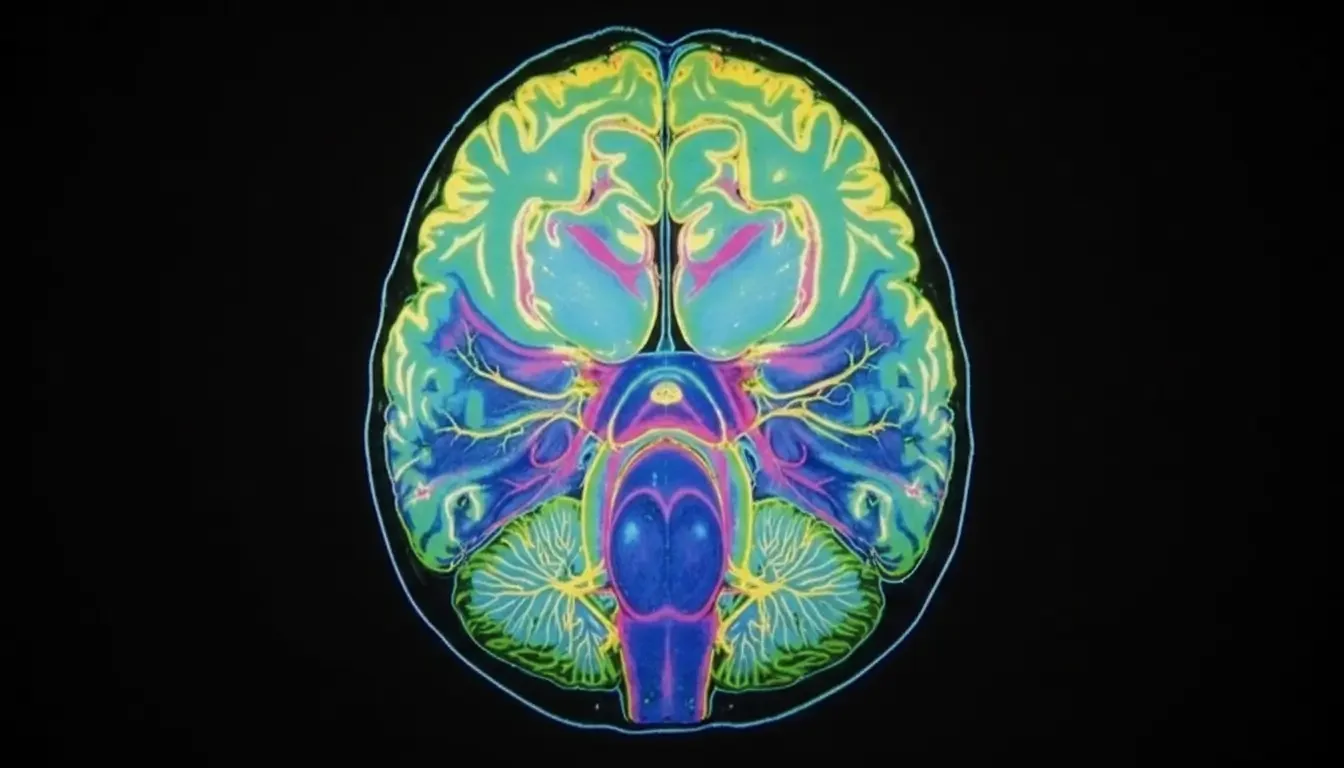
Researchers have found that brief, disruptive brain events in epilepsy follow a predictable pattern, appearing up to one second before they occur. This discovery could lead to new ways to improve life for people with epilepsy.
Many people think of epilepsy as a condition marked only by seizures. However, for those living with it, there are often much more frequent and subtle disruptions that can affect daily life. These interruptions, known as interictal epileptiform discharges (IEDs), are short bursts of abnormal brain activity that can happen thousands of times each day. They often interfere with attention, memory, language, and sleep, making it harder to function normally.
What Happens in the Brain Before These Events Begin
IEDs are less well-known than seizures, but can be just as difficult to manage. These brief brain events can interrupt your thoughts or make it tough to find the right word. Over time, these disruptions can add up, which may help explain why about half of people with epilepsy have some level of cognitive impairment.
Researchers at UC San Francisco have found that these brain blips do not occur randomly, as previously thought. Instead, they follow a pattern that starts about a second before the event itself. This discovery could lead to new ways to better manage epilepsy and support cognitive health for people affected by it.
“We’ve gotten a view into new ways we might address a debilitating aspect of epilepsy that we haven’t been able to tackle.”
The Tools That Uncovered a New Layer of Brain Activity
To identify these patterns, the research team used Neuropixels probes, a new technology that is hair-thin and packed with hundreds of tiny sensors. These probes can record activity from individual neurons deep inside the brain. Unlike traditional sensors that only pick up signals at the brain’s surface, Neuropixels can monitor activity throughout the human cortex, offering a three-dimensional look at what’s happening inside.
Edward Chang, MD, chair of Neurological Surgery and co-senior author, helped adapt these probes for use in people. In this study, his team placed the Neuropixels probes about seven millimeters into the part of the brain where each patient’s seizures began. This is the same area that is often removed during epilepsy surgery.
By tracking more than 1,000 neurons in four patients, researchers observed what happened before, during, and after each IED. Unlike seizures, which show up as a sudden wave of synchronized neuron firing, IEDs unfold in a sequence. One group of neurons becomes active about a second before the IED, a second group creates the sharp spike, and a third group activates as the event fades away.
“We could see individual neurons that were just microns apart from each other playing different roles in the process.”
“It was really striking.”
Everyday Thinking Disrupted in Ways Few Notice
Most of the neurons involved in IEDs are also used for normal activities like language and perception. This overlap helps explain why people may lose their train of thought or have trouble finding the right word during these episodes. Earlier research by the same team showed that IEDs can cause brief lapses in attention and memory.
In this study, researchers found that nearly 80 percent of the neurons involved in IEDs are also active during tasks related to language and perception. This means the same brain cells used for daily thinking are disrupted by these short bursts of abnormal activity.
“Being able to prevent these brain blips would be revolutionary for patients’ quality of life.”
What This Means for the Future of Epilepsy Care
Current implantable devices for epilepsy, known as closed-loop neurostimulators, detect abnormal brain activity and deliver electrical pulses to interrupt it. These devices react to problems as they happen, but the new research suggests a way to act even earlier.
The study indicates that monitoring the initial group of neurons, which activate before the IED, could serve as an early warning. Devices designed to detect this early activity might be able to stop the brain blip before it starts, shifting treatment from a reactive approach to a proactive one.
“That would be a major step forward, changing treatment from reactively responding to abnormal brain bursts to proactively preventing them in the first place.”
While the study involved only four patients and more research is needed, the findings could lead to real improvements in how epilepsy is managed.
Understanding how IEDs form and affect the brain could also help guide new therapies, including adjusting medications or developing cognitive training. Researchers now have a clearer map of how these disruptions happen, which could help improve the daily lives of millions living with epilepsy.
For many, this research brings hope that the most frequent and frustrating symptoms of epilepsy could one day be prevented, not just managed.
Source: News Medical