

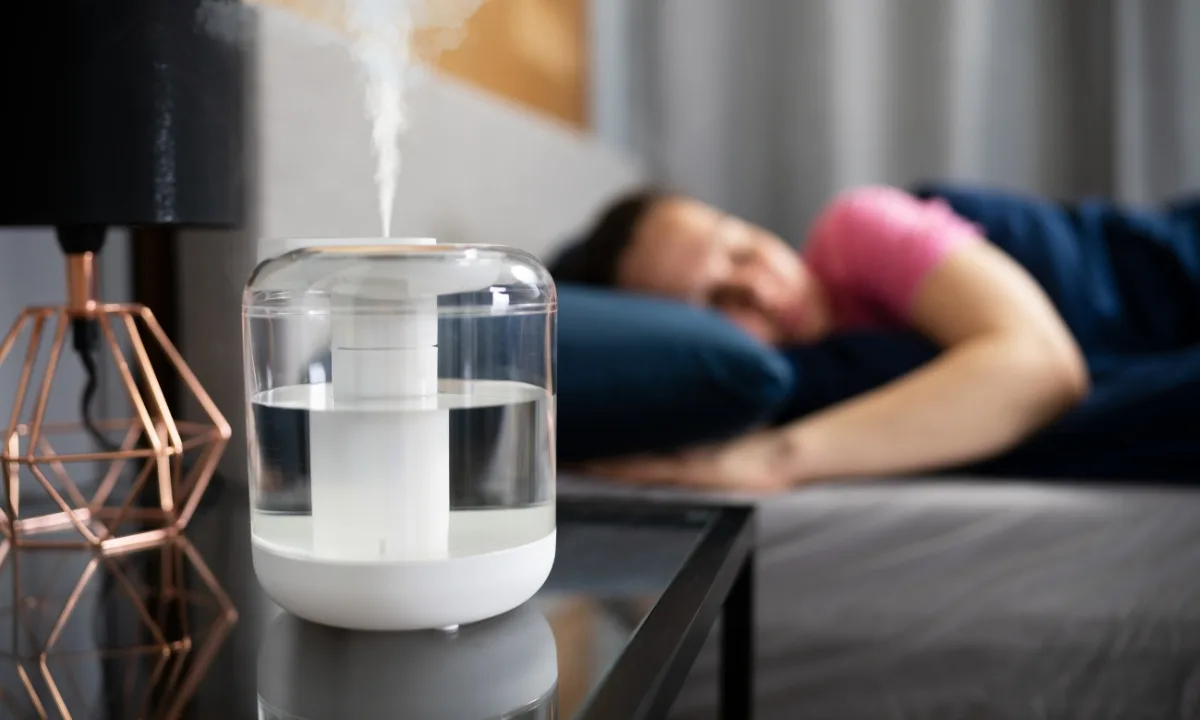
Why Dry Air in Your Bedroom Is a Problem
The Environmental Protection Agency recommends keeping indoor humidity between 30 and 50 percent, and once it drops below that range, your body and your bedroom both start to show it (Healthline). A lower humidity could become troublesome because:
It dries out your airways and skin
When relative humidity falls too low, the moisture that keeps your bronchial tubes hydrated evaporates more quickly, leaving your airways more vulnerable to irritation. That can make existing respiratory conditions like asthma, bronchitis, or sinusitis feel worse overnight. Low humidity is also the classic cause of dry, itchy skin, cracked lips, and irritated eyes by morning.
It may raise your risk of getting sick
Dry indoor air is linked to a higher risk of colds, flu, and other infections, partly because many respiratory viruses survive longer in low-humidity conditions. A 2023 review in the journal Indoor Air similarly concluded that keeping indoor humidity in the “goldilocks zone” of roughly 40–60% relative humidity benefits acute symptoms, work productivity, and lowers the risk of respiratory infections like influenza and COVID-19 (SensorPush, ScienceDirect).
It disrupts sleep in subtler ways too
A dry throat, congestion, or waking up parched are all common complaints in under-humidified bedrooms. They add up to worse sleep quality even if you don’t consciously notice why.
It’s worth noting that humidity is a balancing act: relative humidity above roughly 60–75% can encourage mold growth, which brings its own respiratory problems. The goal isn’t maximum humidity. It’s landing in that 30–50% sweet spot (CDC).
How to Fix Dry Air in Your Bedroom
1. Get a hygrometer before you guess
You can’t fix what you’re not measuring. A simple digital hygrometer (many smart thermostats and weather stations include one) tells you your bedroom’s actual relative humidity, so you know whether you’re dealing with a real problem or just a dry-mouth night. Aim to keep the reading in that 30-50% range.
2. Seal drafts and air leaks
Cold, dry outside air sneaking in through window and door gaps replaces your room’s humidity with drier air, and your heating system then dries it out further as it warms up. Weatherstripping, draft stoppers, and caulking around window frames are cheap fixes that reduce how much dry air gets pulled in.
3. Turn the thermostat down a degree or two
Heated air holds moisture less effectively than it does at lower temperatures, and forced-air heating systems are among the biggest culprits behind winter bedroom dryness. Lowering the thermostat slightly, especially overnight, and layering blankets instead can meaningfully reduce how parched the air gets.
4. Air-dry laundry or hang a damp towel in the room
Letting laundry air-dry on a rack in or near the bedroom releases moisture into the air as it dries. A simple low-tech version: hang a damp towel over a chair or door at night. It’s not a full solution on its own, but it helps in a pinch.
5. Add houseplants
Plants naturally release water vapor into the air through transpiration. They won’t dramatically shift a very dry room, but a few well-chosen bedroom plants (peace lily, spider plant, Boston fern) contribute a small, steady humidity boost along with better air quality overall.
6. Leave a bowl of water near a heat source
An old but genuinely effective trick: place a shallow bowl or tray of water near a radiator, heating vent, or even a sunny windowsill. As it slowly evaporates, it adds moisture to the surrounding air.
7. Shower with the bathroom door open
If your bedroom is near the bathroom, cracking the door during and after a hot shower lets some of that steam drift into the hallway and adjoining rooms, giving nearby bedrooms a temporary humidity boost.
8. Use a humidifier
This is the most reliable, controllable fix. Unlike the tricks above, a humidifier lets you actively maintain a target humidity level instead of hoping ambient moisture happens to land in the right range. Look for a model sized for your room’s square footage, with a built-in hygrostat if possible, so it can automatically stop humidifying once you hit 40-50%. Clean it regularly. Stagnant water in any humidifier tank can grow bacteria or mold, which is then dispersed into the air you breathe.
Best Bedroom Air Humidifiers on Amazon
Here are five well-reviewed humidifiers worth considering, based on tank size, noise level, and how well they’re suited to bedroom use.
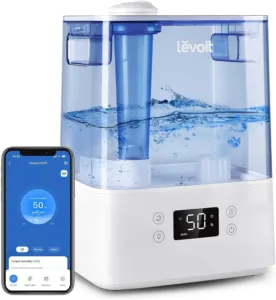 1. Levoit Classic 300S
A top-fill ultrasonic humidifier with a 6-liter tank rated for up to roughly 60 hours of runtime, whisper-quiet operation under 30dB, and an app/voice-control option with an automatic humidity sensor that shuts off once your target level is reached. A strong all-around pick for medium to large bedrooms.
View on Amazon
2. Honeywell HUL520B MistMate
A compact, filter-free cool-mist ultrasonic humidifier built for small rooms and nightstands, with a roughly 0.5-gallon tank and simple manual dial control. A solid budget option if you just need to take the edge off a smaller bedroom.
View on Amazon
3. Crane Drop Ultrasonic Cool Mist Humidifier
A 1-gallon, filter-free ultrasonic humidifier rated for rooms up to about 500 square feet, with up to 24 hours of runtime and an easy-clean, detachable tank. Popular for kids’ rooms and bedrooms alike thanks to its whisper-quiet operation.
View on Amazon
4. Dreo 4L Humidifier (HM311 series)
A larger-capacity top-fill humidifier with a quoted 36-hour runtime, quiet operation around 28dB, precise humidity control, and a built-in nightlight — a good fit if your bedroom runs on the larger side or you want to go longer between refills.
View on Amazon
5. Vicks Warm Mist Humidifier
A budget-friendly warm-mist option with a roughly 1-gallon tank, ideal if you prefer warm mist (useful during illness) and want the option to add a Vicks VapoSteam inhalant to the medicine cup for extra congestion relief.
View on Amazon